


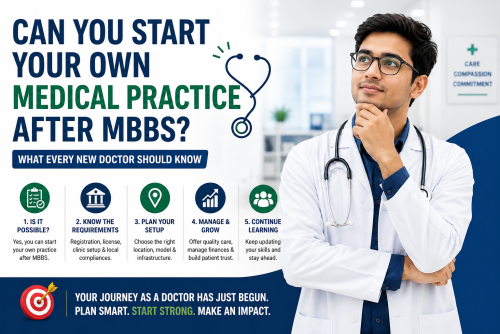
Can You Start Your Own Medical Practice After MBBS? What Every New Doctor Should Know
You've Earned Your MBBS Degree—Is It Time to Open Your Own Clinic?
For many medical graduates, completing MBBS feels like crossing the finish line after years of dedication, examinations, clinical postings, and internship training. Naturally, one of the first questions that arises after graduation is:
"Can I start my own medical practice immediately after MBBS?"
The simple answer is yes, MBBS graduates are legally qualified to practice medicine after obtaining registration with the relevant medical council. However, the real question isn't whether you can start practicing—it's whether you should do so immediately without additional training, mentorship, or clinical experience.
Understanding the realities of independent medical practice can help young doctors make informed career decisions and build a strong professional foundation.
Is an MBBS Doctor Allowed to Practice Independently?
After successfully completing MBBS, internship requirements, and obtaining medical registration, a doctor is legally permitted to practice medicine as a general practitioner.
This means you can:
- Consult patients independently
- Diagnose common medical conditions
- Prescribe medications within your scope of practice
- Manage primary healthcare cases
- Operate a general medical clinic
From a legal perspective, MBBS qualification provides the necessary foundation to begin medical practice.
However, medicine is a profession where confidence and competence develop through continuous clinical exposure.
Why Many Doctors Choose Additional Training Before Starting a Clinic
Although independent practice is possible after MBBS, many graduates choose to gain further experience before opening their own clinic.
There are several reasons for this decision.
Building Clinical Confidence
Medical school provides extensive theoretical knowledge, but real-world patient management often presents situations that textbooks cannot fully prepare you for.
Working in hospitals allows doctors to:
- Handle diverse patient cases
- Improve diagnostic skills
- Develop treatment planning abilities
- Learn emergency management
- Gain confidence in clinical decision-making
The more patients you see, the stronger your clinical judgment becomes.
Learning Patient Communication
Successful doctors are not defined only by medical knowledge.
- Patients expect:
- Clear explanations
- Empathy
- Trustworthiness
- Professional communication
Hospital experience helps young doctors understand patient expectations and develop effective communication skills that are essential for private practice success.
Understanding Practice Management
Running a clinic involves much more than treating patients.
- Doctors must also understand:
- Medical documentation
- Clinic administration
- Staff management
- Legal compliance
- Patient records
- Billing procedures
Many of these practical aspects are learned through experience rather than medical education.
Is Postgraduate Specialization Necessary Before Private Practice?
One of the most common misconceptions among MBBS graduates is that they must complete MD or MS before practicing medicine.
This is not entirely true.
An MBBS doctor can legally work as a general practitioner without pursuing postgraduate specialization.
However, postgraduate education offers several advantages:
Enhanced Expertise
MD and MS programs provide advanced training in specific medical fields.
- Greater Career Opportunities
- Specialists often have access to:
- Higher-paying positions
- Academic careers
- Hospital leadership roles
- Research opportunities
- Increased Patient Demand
- Many patients actively seek specialist consultation for specific health conditions.
While specialization is not mandatory for practice, it can significantly expand career possibilities.
The Growing Trend Toward Specialization
Healthcare in India and around the world is becoming increasingly specialized.
Patients frequently search for:
- Cardiologists
- Dermatologists
- Orthopaedic Surgeons
- Paediatricians
- Gynaecologists
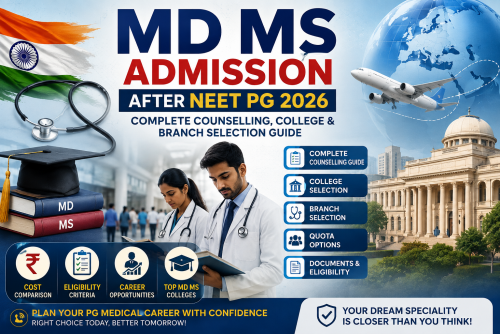
As a result, many MBBS graduates choose to pursue MD or MS through NEET PG before establishing long-term private practice.
Specialization often provides a competitive advantage in today's healthcare environment.
Should You Work in a Hospital Before Opening a Clinic?
For most new doctors, the answer is yes.
A few years of hospital experience can provide invaluable exposure that strengthens both clinical and professional skills.
- Hospital practice allows doctors to:
- Manage complex cases
- Learn from senior consultants
- Understand referral systems
- Build professional networks
Gain practical confidence
Many successful clinic owners first spent several years working in government hospitals, private hospitals, or specialty centers before establishing independent practice.
Before opening your own practice, consider the following:
Am I Clinically Confident?
Can you independently diagnose and manage common medical conditions?
Do I Have Adequate Experience?
Have you handled a sufficient variety of patient cases?
Do I Understand Legal Responsibilities?
Medical practice involves documentation, informed consent, and ethical obligations.
Do I Have a Financial Plan?
Clinic setup, equipment, rent, staffing, and operating expenses require investment.
What Are My Long-Term Career Goals?
Do you see yourself as a general practitioner or as a future specialist?
Answering these questions honestly can help determine the right time to begin independent practice.
Frequently Asked Questions (FAQs)
1. Can I legally start a clinic after MBBS?
Yes. After completing MBBS, internship, and medical registration, you are legally qualified to practice as a general practitioner.
2. Is MD or MS mandatory to start medical practice?
No. Postgraduate specialization is not mandatory for general practice, but it can provide additional expertise and career opportunities.
3. Should I gain hospital experience before opening a clinic?
Most medical professionals recommend gaining practical hospital experience to build confidence and clinical skills.
4. How many years of experience should I have before starting a clinic?
There is no fixed requirement, but many doctors work for 1–5 years in hospitals before establishing independent practice.
5. Can an MBBS doctor prescribe medicines?
Yes. Registered MBBS doctors are authorized to prescribe medications within their scope of practice.
6. What are the benefits of pursuing MD/MS before private practice?
Specialization can improve clinical expertise, increase patient trust, and open doors to higher-paying career opportunities.
7. What challenges do new clinic owners face?
Common challenges include patient acquisition, clinic management, financial planning, legal compliance, and building a professional reputation.
8. Is general practice still a good career option?
Yes. General practitioners continue to play a vital role in primary healthcare and community medicine.
9. Can I prepare for NEET PG while working?
Yes. Many doctors combine clinical work with NEET PG preparation before pursuing postgraduate specialization.
10. What is the most important factor before starting independent practice?
Clinical confidence, practical experience, ethical responsibility, and a commitment to continuous learning are all essential for successful medical practice.