


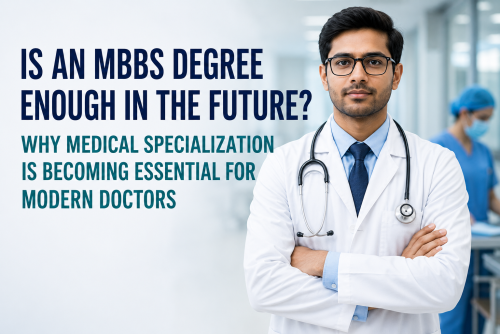
Is an MBBS Degree Enough in the Future? Why Medical Specialization Is Becoming Essential for Modern
The Medical Career Question Every MBBS Graduate Is Asking
For decades, earning an MBBS degree was considered the ultimate gateway to becoming a respected doctor. It provided the knowledge, skills, and legal authority required to diagnose illnesses, treat patients, and build a successful medical career.
Today, however, the healthcare landscape is changing rapidly.
Medical science is advancing at an unprecedented pace. Hospitals are becoming increasingly specialized. Patients are more informed than ever before. New technologies, artificial intelligence, precision medicine, and advanced treatment protocols are transforming healthcare delivery across the world.
As a result, many medical students and young doctors are beginning to ask an important question:
"Will an MBBS degree alone be enough in the future, or is medical specialization becoming essential?"
The answer is more complex than a simple yes or no.
The MBBS Degree Remains the Foundation of Every Medical Career
Before discussing specialization, it's important to understand one thing:
MBBS is not a low-value degree.
An MBBS degree is the foundation upon which every medical specialty is built.
Every Cardiologist, Neurologist, Orthopaedic Surgeon, Dermatologist, Paediatrician, and General Physician begins their journey with MBBS.
The degree equips doctors with:
- Medical knowledge
- Clinical skills
- Patient management abilities
- Diagnostic expertise
- Ethical and professional responsibilities
Without MBBS, there is no pathway to becoming a specialist doctor.
Even in the future, MBBS will continue to remain one of the most respected professional qualifications in healthcare.
Why Many People Feel MBBS Alone Is No Longer Enough
The perception comes from the growing trend toward specialization.
Twenty years ago, general practitioners were often the first and primary point of care for most patients.
Today, patients frequently search directly for specialists.
Instead of searching for a doctor, patients search for:
- Dermatologist near me
- Child specialist
- Orthopaedic surgeon
- Heart specialist
- Fertility specialist
- Neurologist
This shift has increased demand for doctors with postgraduate qualifications such as MD, MS, and DNB.
As specialist healthcare grows, many MBBS graduates feel pressure to pursue further education.
The Future of Medicine Is Becoming More Specialized
Modern medicine is no longer limited to broad treatment approaches.
Healthcare today involves:
- Robotic surgery
- Precision medicine
- Genomic testing
- Advanced imaging
- Interventional procedures
- Artificial intelligence-assisted diagnostics
The amount of medical knowledge available today is impossible for one person to master entirely.
This is why healthcare systems increasingly rely on specialists.
Hospitals require experts who can focus on specific organs, diseases, age groups, and treatment methods.
As medical science advances, specialization is becoming more valuable than ever before.
Does This Mean MBBS Doctors Will Become Irrelevant?
Absolutely not.
Healthcare systems cannot function without MBBS doctors.
In fact, the demand for primary healthcare physicians continues to grow worldwide.
MBBS doctors remain essential in:
Primary Healthcare
General practitioners diagnose and manage common illnesses, helping reduce the burden on specialist services.
Community Medicine
Public health initiatives depend heavily on MBBS-qualified doctors.
Rural Healthcare
Many rural communities rely on MBBS doctors as their primary healthcare providers.
Emergency Care
Emergency departments frequently require doctors with broad clinical knowledge.
Family Medicine
Patients often prefer long-term relationships with family physicians who understand their complete health history.
The future of healthcare will continue to require both specialists and general practitioners.
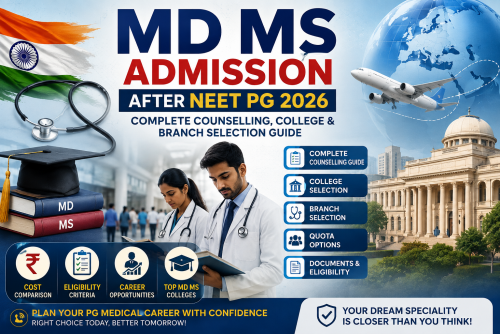
Why More MBBS Graduates Are Pursuing MD/MS Programs
Although MBBS remains valuable, many graduates choose postgraduate specialization because it offers several advantages.
Advanced Medical Expertise
Specialization allows doctors to develop deeper knowledge in a specific field.
Better Career Opportunities
Many hospitals actively seek doctors with MD or MS qualifications.
Higher Professional Recognition
Specialists are often viewed as experts in their fields.
Greater Earning Potential
Specialized services typically command higher consultation fees and salaries.
Academic and Research Careers
Many teaching institutions and research organizations prefer candidates with postgraduate qualifications.
This explains why NEET PG has become one of the most competitive examinations in India.
The Impact of Technology and Artificial Intelligence on Future Doctors
Artificial Intelligence is transforming healthcare.
AI can assist doctors by:
- Analyzing medical images
- Identifying patterns in patient data
- Supporting diagnosis
- Improving treatment planning
However, AI cannot replace doctors.
Patients need:
- Empathy
- Communication
- Clinical judgment
- Ethical decision-making
- Human connection
The future belongs to doctors who combine medical expertise with technological competence.
Whether you are an MBBS doctor or a specialist, adapting to technological advancements will be critical.
Is Specialization Necessary for Career Growth?
The answer depends on your career goals.
If your goal is to work in:
- Community healthcare
- Family medicine
- Rural healthcare
- General practice
An MBBS degree may provide excellent opportunities.
If your goal is to become:
- Cardiologist
- Dermatologist
- Orthopaedic Surgeon
- Radiologist
- Neurologist
- Gynaecologist
Then postgraduate specialization becomes essential.
The key is understanding the type of medical career you want to build.
What Will Future Healthcare Employers Look For?
Healthcare employers are increasingly seeking doctors who possess:
Clinical Competence
Strong medical knowledge remains fundamental.
Continuous Learning
Medicine evolves constantly.
Adaptability
Healthcare systems are changing rapidly.
Technology Skills
Digital healthcare and AI are becoming standard.
Communication Skills
Patient-centered care remains essential.
Doctors who embrace lifelong learning will remain valuable regardless of their qualification level.
So, Is MBBS Enough in the Future?
The answer is yes—and no.
Yes, because MBBS remains the foundation of the medical profession and continues to be essential for healthcare systems worldwide.
No, if your goal is to access highly specialized clinical roles, advanced hospital positions, academic careers, or super-specialty opportunities.
The future of medicine is not about replacing MBBS.
It is about building upon it.
For some doctors, MBBS will remain the ideal qualification for their chosen career path.
For others, MD, MS, DNB, and super-specialty programs will become the next step toward achieving their professional ambitions.
Frequently Asked Questions (FAQs)
Is MBBS enough to become a successful doctor in the future?
Yes. An MBBS degree remains a highly respected qualification and allows doctors to practice medicine legally. However, many doctors pursue MD/MS specialization for advanced career opportunities.
What is the future scope of MBBS doctors in India?
The future scope of MBBS doctors remains strong in primary care, family medicine, public health, emergency medicine, rural healthcare, and telemedicine services.
Is specialization necessary after MBBS?
Specialization is not mandatory but is becoming increasingly valuable due to growing demand for specialist healthcare services.
Can an MBBS doctor earn well without MD/MS?
Yes. Many experienced MBBS doctors build successful careers through private practice, hospital employment, healthcare administration, and public health services.
Why are more doctors pursuing MD after MBBS?
Doctors pursue MD after MBBS to gain specialized expertise, improve career opportunities, increase earning potential, and access academic or research careers.
What are the best postgraduate medical courses after MBBS?
Popular postgraduate medical courses include MD, MS, DNB, Diploma Programs, Family Medicine, and various super-specialty courses.
Is NEET PG compulsory for MD/MS admission?
Yes. NEET PG is the primary entrance examination for MD and MS admissions in India.
Will Artificial Intelligence replace MBBS doctors?
No. AI can support healthcare delivery, but human doctors remain essential for clinical judgment, patient communication, and ethical decision-making.
What is the difference between MBBS and MD?
MBBS is an undergraduate medical degree that qualifies a person as a doctor, while MD is a postgraduate specialization that provides advanced expertise in a specific field.
What is the best career option after MBBS?
The best career option after MBBS depends on individual goals and may include general practice, hospital medicine, public health, research, or postgraduate specialization through MD/MS programs.